
Signs Your Honda Civic or Accord ECM Is Failing
Honda’s Civic and Accord are famously reliable, but their engine computers — the ECM — can still fail with age, especially on higher-mileage 1990s and 2000s models. Here’s what to look for.
Symptoms on Honda ECMs
- A no-start where the engine cranks but won’t catch
- Intermittent stalling, often when warm
- Check engine light with codes that return after clearing
- Rough idle or hesitation on acceleration
- Failed emissions test with no obvious mechanical cause
Older Hondas in particular are known for ECM capacitor failure, which can cause exactly these intermittent, heat-related symptoms. The full symptoms of a bad ECM guide covers how to confirm it.
Why they fail
On many 1990s Hondas, aging internal capacitors leak and corrode the board, causing erratic behavior before a full failure. Heat and vibration accelerate it. A refurbished unit with the fault properly addressed — or a tested replacement — resolves it.
The fix
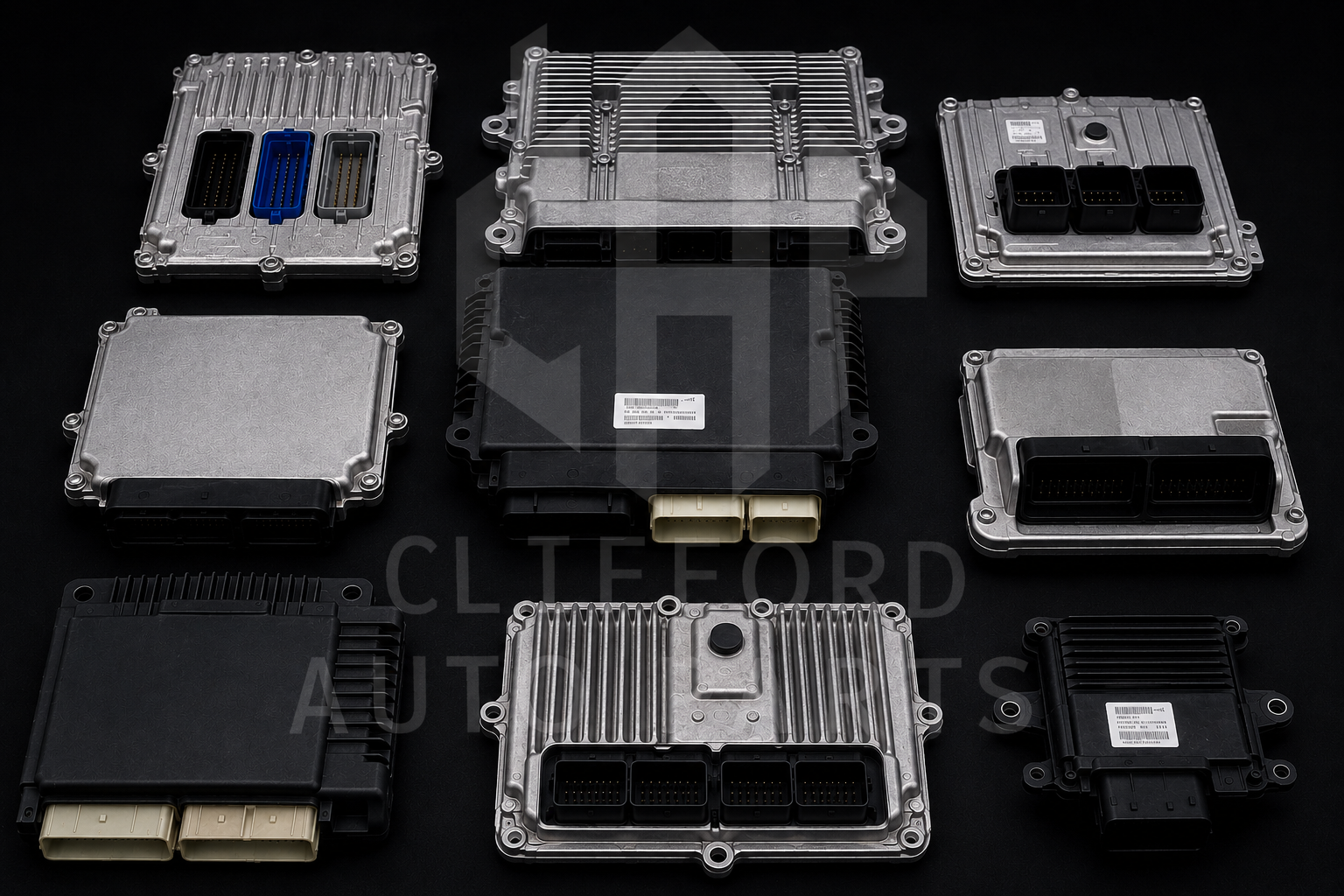
Our Honda engine computers cover the Civic, Accord, Prelude, CRX and more, each tested in-house and programmed to your VIN so it’s plug and play. Not sure whether a used Honda ECM needs coding? Here’s how programming works. Call (516) 494-7838 to match the right module to your Honda.
Frequently Asked Questions
What are the symptoms of a bad Honda Civic and Accord ECM?
Common signs include a check engine light that returns after clearing, hard starting or a no-start, rough idle or misfires, and unusual shifting. These overlap with sensor faults, so an OBD-II scan is the best way to confirm the module is the cause.
Does a replacement Honda Civic and Accord ECM need to be programmed?
Yes. A replacement module should be programmed to your vehicle’s VIN so it installs plug and play. Every unit from Clifford Auto Parts is flashed to your VIN before shipping, so no dealer programming is needed.