PCM vs ECM vs ECU: What’s the Difference? (Simple Guide)
If you’ve been shopping for an engine computer, you’ve probably seen three names used almost interchangeably: PCM, ECM, and ECU. It’s confusing, and it matters when you’re ordering a part. Here’s the difference in plain English.
ECU — Engine Control Unit
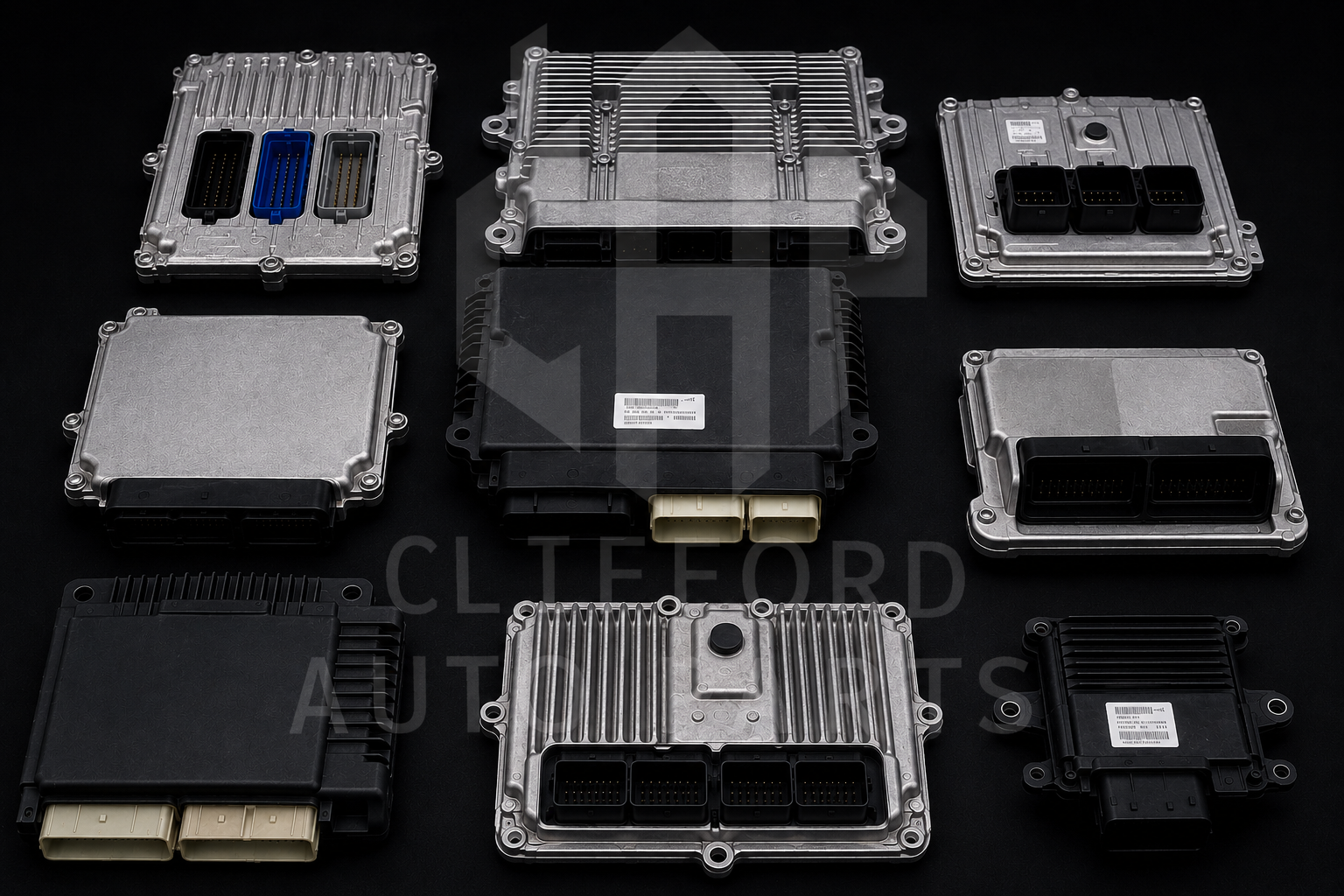
The broadest term. An ECU is any electronic control unit in the car, but when people say “the ECU” they usually mean the one running the engine. It manages fuel injection, ignition timing, and the air-fuel mixture.
ECM — Engine Control Module
Essentially another name for the engine’s controller. “ECM” and “engine ECU” refer to the same job: the computer that controls how the engine runs. Many manufacturers simply prefer this label.
PCM — Powertrain Control Module
This is where it differs. A PCM controls both the engine and the transmission from a single unit. Many Ford, GM, Dodge, and Chrysler vehicles use a PCM instead of separate engine and transmission computers. If your car has one box handling both, that’s a PCM.
So which one does my car have?
- If the engine and transmission are managed by one combined unit → PCM
- If a dedicated unit runs only the engine → ECM / ECU
- Older or simpler vehicles → usually ECM/ECU, with a separate transmission controller if automatic
The good news: for ordering a replacement, what matters isn’t the label — it’s your year, make, model, engine size, and VIN. Those pin down the exact part regardless of what it’s called.
New to these parts? Start with what a PCM actually does, or learn whether a used module needs programming.
Ordering the right one
Clifford Auto Parts stocks programmed PCM, ECM, and ECU units across most makes and model years, each flashed to your VIN and ready to install. Tell us your vehicle and we’ll identify the correct module — no guessing about acronyms. Call (516) 494-7838 or browse by your vehicle’s brand.